How Is Dubai? Property Market Q3 2026
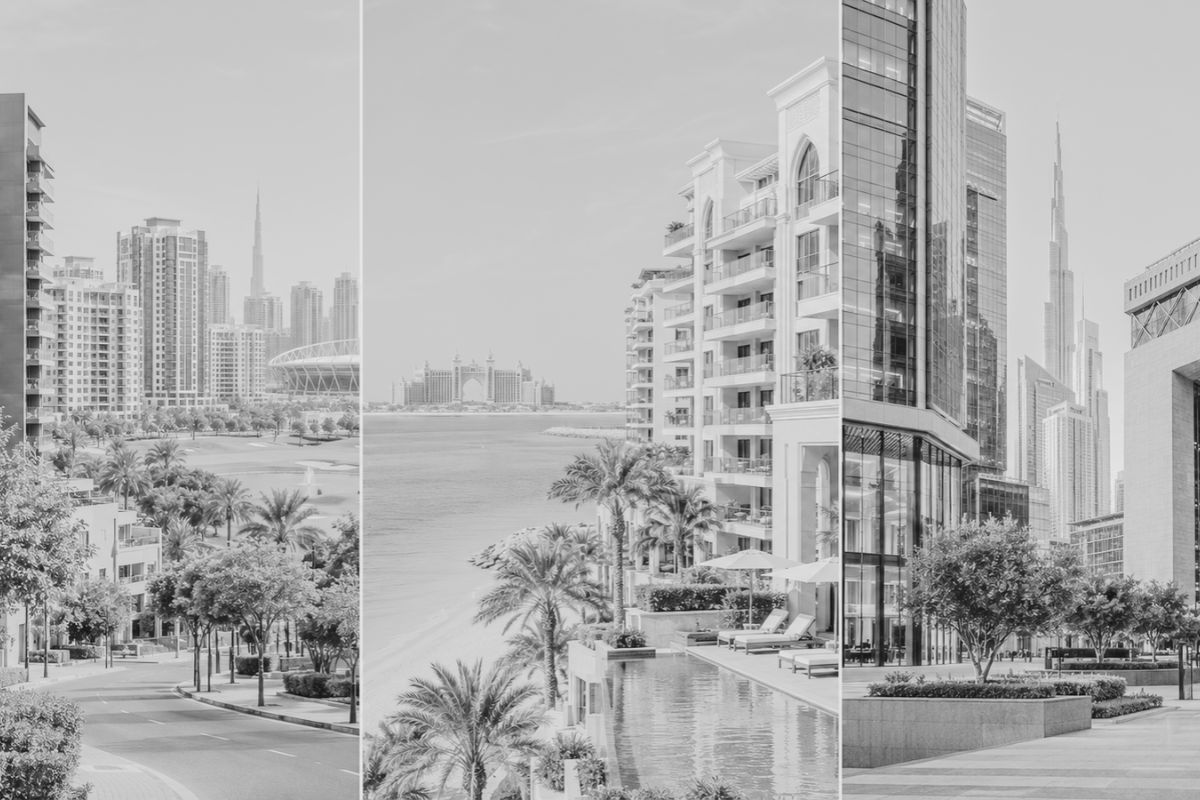
Dubai home prices are stabilising. Office rents are up 12%. Some prime apartment locations have lost up to 21.7% in assessed value.
Same city. Same quarter. Very different market conditions.
One of the questions clients ask me most often is: “How is Dubai’s property market doing?”
The Q3 2026 figures offer an interesting answer.
Residential: Look beyond the citywide average
According to CBRE, average residential sales prices in Dubai were around 1% lower year-on-year. Residential rents softened by approximately 7% year-on-year.
That sounds like a relatively stable market.
But look at what happened in individual apartment locations.
ValuStrat’s September 2026 apartment valuation index shows:
- Dubai Sports City: +3.1% year-on-year
- Dubai Silicon Oasis: +2.7%
- Burj Khalifa area: −21.7%
- Jumeirah Beach Residence: −18.3%
- Palm Jumeirah apartments: −9.8%
Some affordable locations are recording better valuation performance than several established premium apartment addresses.
However, Savills reports that prime apartment prices increased 4% year-on-year across its own sample.
How can both be true?
Because different reports measure different properties, locations and market segments. A decline in one premium location does not describe the entire luxury market.
And an index measures changes in estimated property values. It cannot tell you exactly what your own apartment would sell for today.
Sales: Up or down? Both.
ValuStrat recorded 9,491 resales of completed homes in Q3.
That’s 18.5% more than the previous quarter, but 23.8% fewer than a year earlier.
Meanwhile, off-plan registrations fell to 24,375 — down 10.1% quarter-on-quarter and 45.7% year-on-year.
A headline can therefore say that ready-home sales increased. Another can say they declined. Both may be accurate.
The difference is the comparison period.
For anyone making a property decision, that detail matters.
The most revealing number
Savills found that Dubai’s average apartment price per square foot declined 4.8% during Q3.
But when it compared similar properties on a like-for-like basis, the decline was 1.7%.
The explanation is surprisingly simple.
Imagine a quarter in which more smaller, cheaper or differently located apartments are sold. The overall average can fall partly because the mix of transactions has changed.
That tells us why a citywide average is a poor shortcut for pricing one apartment.
Before deciding what a property is worth, we need to understand what actually sold — and what makes those properties comparable.
Commercial property: A different picture
CBRE’s Q3 figures show:
- Offices: average rents +12% year-on-year; occupancy around 95%.
- Industrial and logistics: rents +12%.
- Retail: average rents +5%; occupancy around 97%, with prime destinations performing particularly well.
While residential prices are stabilising, business-related property segments continue to record rental growth.
Supply conditions play an important role. When suitable premises are limited, tenants may face higher rents even as other parts of the property market cool.
An investor evaluating a warehouse or office therefore faces a different set of questions from someone buying an apartment.
What does this mean in practice?
If you’re buying, recent comparable sales matter more than the percentage in a market headline.
If you’re selling, a rising neighbourhood index offers context, but the achievable selling price depends on the property and its competition.
If you’re investing, rental income, operating costs and the conditions of a future sale all need to work together.
And if you’re expanding a business, the availability and suitability of the premises may matter more than the average rent across Dubai.
So, how is Dubai?
Residential prices are broadly stabilising, although individual locations are moving very differently. Ready-home resale activity improved from the previous quarter but remains below last year. Off-plan registrations declined, while offices, industrial property and retail continued to record rental growth.
The city is moving at different speeds.
And the more important the property decision, the less useful a single market average becomes.
That’s why, when advising clients in Dubai, I start with comparable transactions, the economics of the individual property and the conditions for a realistic exit.
Which property, at what price, for what purpose?
Sources
- CBRE — UAE Real Estate Market Review Q3 2026
- ValuStrat — Dubai VPI Residential Values, September 2026; Dubai Real Estate Review Q3 2026
- Savills — Dubai Residential Market in Minutes Q3 2026
For information only. Not financial or investment advice.